Traveling to South Korea for the first time is one of those novel feelings that I wish I could experience again, but as a South African who has lived here for 6+ years now, remains a nostalgic memory to me.
I've made multiple round trips to South Korea over the years for varying reasons such as short-term tourist stays, special tour programs, and the most relevant, moving my entire life here for what turned out to be a long-term stay.
With that said, I wanted to share helpful information for anyone who might be traveling to South Korea for the first time, based on my experience as an immigrant in the country.
Note: This article will focus more on general Korean travel and Seoul-based advice than other cities in Korea, purely because of time constraints. I'm happy to write more articles about traveling outside of Seoul, though. Just leave me a comment and let me know.
Flights, Airlines To Use, & Landing at the Incheon International Airport
When flying to South Korea, you'll be landing at Incheon International Airport (in the city Incheon - not Seoul - that's a common misconception), which is currently ranked as the second-best airport in the world overall, as of 2026.
Your choice of flight and the terminal you thus land in will vary depending on your departure point. As a South African, my personal favourite airlines to use flying in and out of Korea are Singapore Airlines (Singapore makes for a super fun layover trip), Qatar Airways, or Cathay Pacific, depending on which airline has the cheapest flight. I've flown Ethiopian Airways before as well (because I was booking the flight quite last minute and needed a cheap option), but personally wouldn't recommend it because the service, cabin quality/experience, and even airport are not for the faint of heart. Essentially, you get what you pay for.
I digress... Before you even think about landing at Incheon, though, do your due diligence on South Korea's entry requirements, they've evolved quite a bit in recent years and the last thing you want is to be held up at immigration when you could be on the AREX train into the city already.
Depending on your nationality, you may need to submit an e-Arrival Card (or K-ETA) online at least three days before you fly, and filling out the Q-Code health declaration beforehand means you can skip the manual screening lines at customs entirely.
Know which terminal you're arriving at since Incheon has two, and they're about 18-20 minutes apart from each other. If you're on a larger international flight, it's likely you'll land at Terminal 2. The AREX train is your fastest route into Seoul (about 43 minutes to Seoul Station on the express).
After going though baggage claim, your first stop should be a convenience store to pick up a T-Money card. That's your transportation card that you need to preload (either at a convenience store or inside the subway station) to tap when you get on and off the subway, buses, and even when getting off a taxi (only when you get out). You'll need it for basically every form of public transport and you can top it up with cash anywhere.
Sidenote: There is currently a rise in taxi scams for foreign tourists, where the drivers attempt to charge multiple times the usual price for the same distance. If you can't book a taxi through the Kakao T (Kakao Taxi) app, and end up hailing one down in person, make sure you see them start the meter when you get in the car and that you pay the exact amount that comes out on the meter upon arrival. If they try to tell you about other fees, be skeptical. Note that there can be surge fees (even through Kakao T) past midnight and into the AMs, especially in crowded areas with a lot of demand like Itaewon near the clubbing areas. Also, Uber does exist in Korea but it might be harder to call an Uber as they have far less vehicles available compared to Kakao Taxi.
One last thing you might want to get done at the airport so that you don't have to worry about it later is getting your sim card. I'd recommend getting one that fits the length of your stay through a service like GetYourGuide or Klook (which will direct you to a telecom booth for companies like KT (Korea Telecom) or SKT (SK Telecom) where you can pick up the sim card upon arrival - some might even include the transportation card). There is Wi-Fi available almost everywhere (and Korea boasts some of the best internet speeds in the world) but having a sim card from a local telecom will be far more reliable.
Where to Stay and Visit
There are quite a few districts and neighbourhoods that are ideal for tourists to stay in when traveling to Korea, depending on what you're looking to experience in the surrounds. Although, because the city's transport is super accessible via public transport and taxi, the location of your accommodation isn't thaaat critical.
You could stay in the Gangnam or Jamsil areas, which are the affluent neighbourhoods of Seoul (mostly business districts) but with plenty of shopping spots, luxury nightlife spots, and trendy restaurants/cafes to explore.
Jamsil is home to the Lotte Tower which hosts the Lotte World Mall and is connected to Lotte World (one of the most famous amusement parks in Korea where you can wear Korean school uniforms).
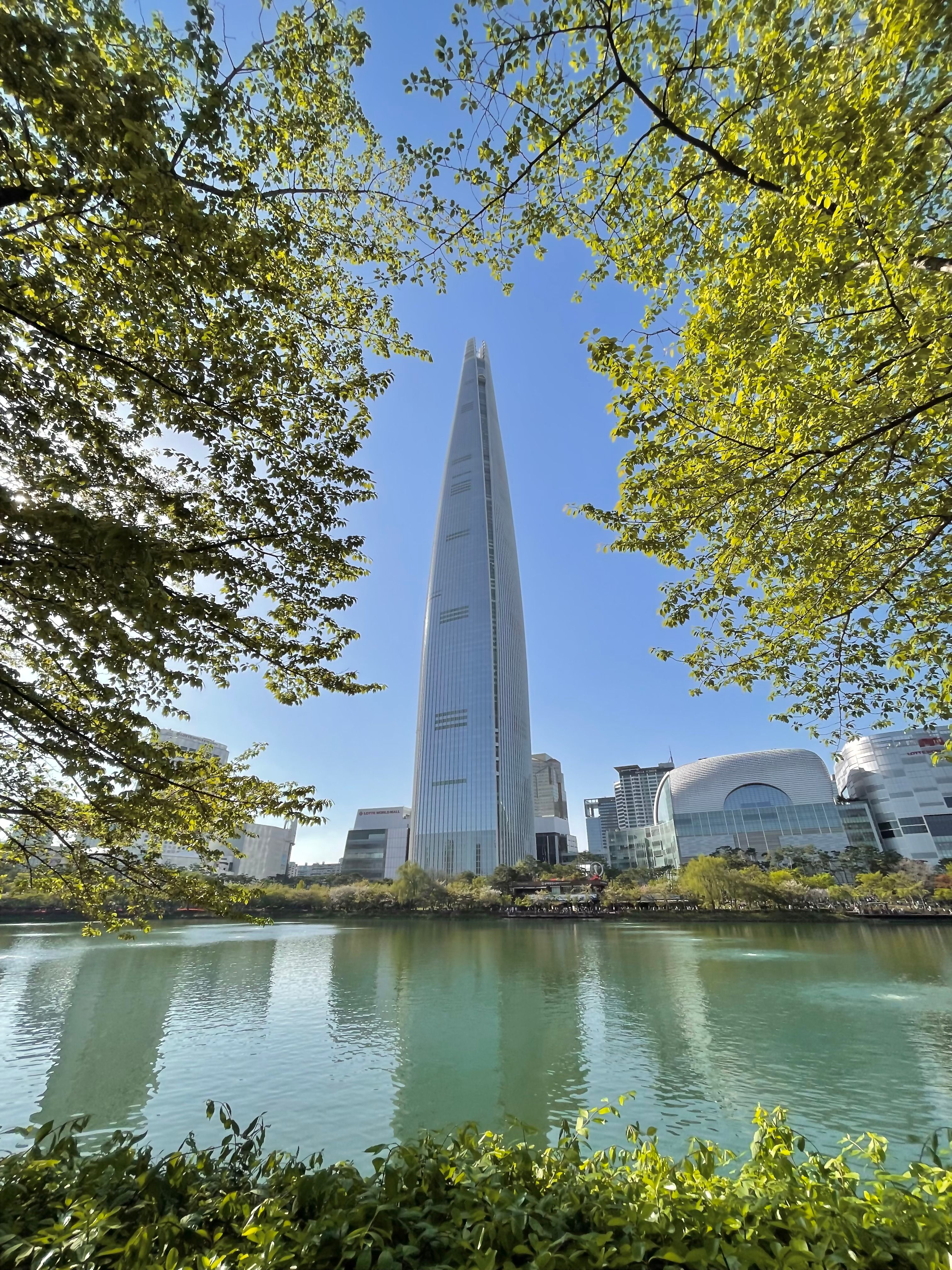
It's also close enough to Seongsu (arguably the hottest neighbourhood in Seoul at the moment) to enjoy the vibe without having to live in the chaos as so many people flood the neighbourhood these days.
Alternatively, you can stay in Itaewon (Yongsan District) which is where you will find the most foreigners at any given time. It's a foreigner district with a lot of nightlife (supposedly suited more to those in their late 20s, 30s, and 40s) and delicious restaurants with global cuisine. It's also close enough to neighbourhoods that Koreans prefer to hang out in such as Haebangchon or Hannam-dong.
Some other honorable mentions for areas to stay in include the neighbourhoods of Hongdae, Hapjeong, and Yeonnam-dong. The latter two are adjacent neighborhoods to the student-friendly Hongdae (which gets it's name from being the home of Hongik University (Hongik Dae-hak-kyo - 홍익대학교 in Korean). These areas have their own distinct nightlife and trendy restaurant/cafe feel to them, as well.
The Jongno District and Jung Districts are great areas to stay in if you want to be in the literal center of Seoul where more of the historical attractions and architecture can be found. You'll find the five royal palaces (Gyeongbokgung, Changdeokgung, Changgyeonggung, Deoksugung, and Gyeonghugung) built during the Joseon Dynasty here. As well as hip neighborhoods like Euljiro and Ikseondong, and other more touristy areas like Myeongdong and Insadong, too.
If you're looking for a reasonably priced hotel to stay in near City Hall and the Namdaemun Market, check out my review of the Travelodge Myeongdong City Hall Hotel.
Travelodge is one of the more budget-friendly hotel franchises in Seoul, as well as hotels like Toyoko Inn. A step up from that would likely be the Glad Hotel franchise, and then there are the luxury hotel franchises like the Shilla Stay, Lotte Hotels, Marriott International, Hyatt Hotels, and so on.
There are, of course, also a plethora of Airbnbs available with a lot of self-check-in options, too. It's just a matter of choosing what's best for you on your budget.
Getting Around: Transport in South Korea
Getting around Seoul specifically (and South Korea more broadly) is genuinely one of the easiest parts of visiting the country, and a big reason why your accommodation location isn't as critical as you might think.
Using Maps in Korea
The first thing to know is that Google Maps is largely unreliable in South Korea. They have recently improved it and approved the export of the detailed mapping data to this foreign server (this wasn't possible before for national security reasons). However, in this case local is better.
What you should use instead is either Naver Map (네이버 지도) or Kakao Map (카카오맵). Both are available in English and are incredibly accurate for walking, driving, and public transit directions. Naver Map is generally considered the more comprehensive of the two (and my personal favorite - I always get lost using Kakao Map), especially for public transit routing, and it'll tell you exactly which subway exit to take, which is more useful than it sounds when you're standing in a station with 15 exits. It's also great at telling you real-time arrival times for buses and trains so that you can time your walking, too.
Korean's Favorite Form of Transport: BMW - Bus, Metro, Walking
Koreans always joke that they use BMWs for transport but it's actually a reference for the combination of taking the bus, metro (subway), and then walking haha. Of course, many have cars, but I personally wouldn't recommend renting a car to get around particularly Seoul (it might be okay for places like Jeju Island) as Korean driving can be on another level and, in any case, there are restrictions on foreigners being able to rent cars, regardless. Either that or depending on the rental company, they might make it difficult for you.
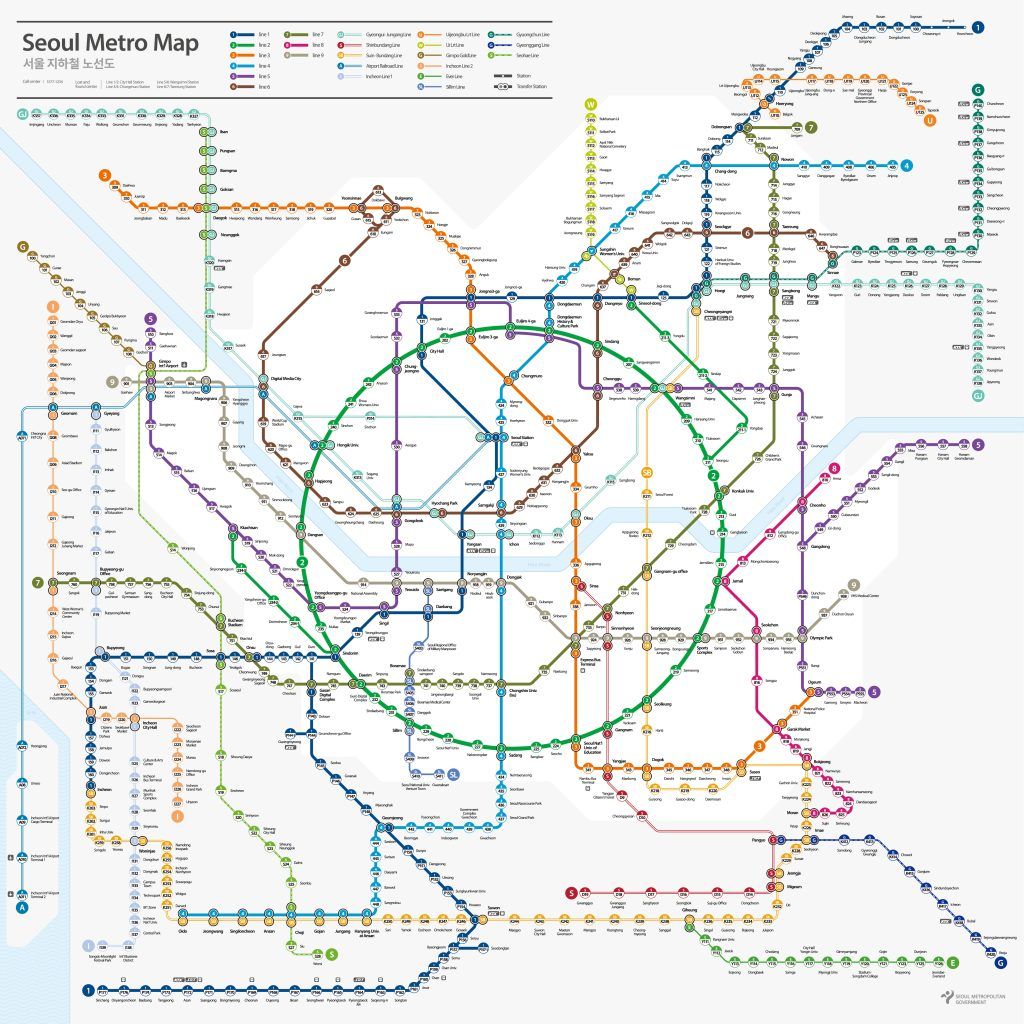
Seoul's subway system is one of the best in the world, it's clean, punctual, cheap, and goes practically everywhere you'd want to go as a tourist. Fares typically range between 1,500 and 2,700 KRW per ride depending on distance, and you pay using your T-Money card (tap in, tap out). The signage is in Korean and English throughout, and most stations have English announcements too, so navigating as a non-Korean speaker is very manageable.
There are 24 rapid transit, light metro, and commuter rail lines on the Seoul Subway System. Here's a visual:
One thing to know about subway etiquette: keep your voice down and do not sit in the priority seats near the doors, those pink, yellow, or red seats are reserved for the elderly, pregnant women, and people with disabilities, and Koreans take this seriously. You might see some offenders (but just know that everyone is secretly judging them - I've seen my share of people fight over who truly has the right to that seat too).
I digress again... The one major limitation of the subway is that it stops running at around midnight (sometimes 1 AM depending on which line it is). If you're planning a late night out (and Seoul's nightlife absolutely warrants one), make sure you have a plan for getting home before the last train stops or budget for a taxi.
Buses in Seoul are color-coded by route type, blue buses are for long-distance cross-city routes, green buses cover shorter local routes, red buses connect Seoul to the wider Gyeonggi-do province, and yellow buses do short circular routes within specific areas (some are also airport buses - which cost a couple times more). You also pay with your T-Money card, tapping both when you get on and when you get off (don't forget to tap out, as it affects your fare).
This one might sound obvious (but I didn't know this when I first came to Korea), but if you want to get off the bus at the next stop, make sure to press any red button that says 'stop' to let the bus driver know, otherwise they'll keep on driving or won't open the door even if they stop to pick someone up. Keep an ear out for the bus announcements (and an eye on your map) to know when it's your final stop, too.
Naver Map will tell you exactly which bus number to take and where to stand to get on that, which makes the system far less intimidating than it looks at first glance. If you're taking a red bus, there is a line system to get onto these. Make sure you're standing in the right line (indicated in paint on the floor) so that you can get on swiftly.
As mentioned, subways shut down around midnight, and while there are a handful of night buses that run through the early hours, they don't cover the city nearly as comprehensively (and they get super crowded too). Your realistic late-night options are a Kakao Taxi (book through the app for a metered, tracked ride) or hailing a taxi; just remember the tips from the airport section about checking the meter. Surge pricing kicks in past midnight, especially in high-demand areas like Itaewon and Hongdae, so don't be shocked when the fare is slightly higher than you expected.
What to Pack for Traveling to Korea
The #1 Priority: Packing for the Weather
One of the things that Koreans LOVED to appeal to me when I first arrived in Korea is that, "Korea has 4 unique seasons," and while that's technically true, in recent years Korea has seen a lot of the impact of global warming through sometimes unpredictable climate change.
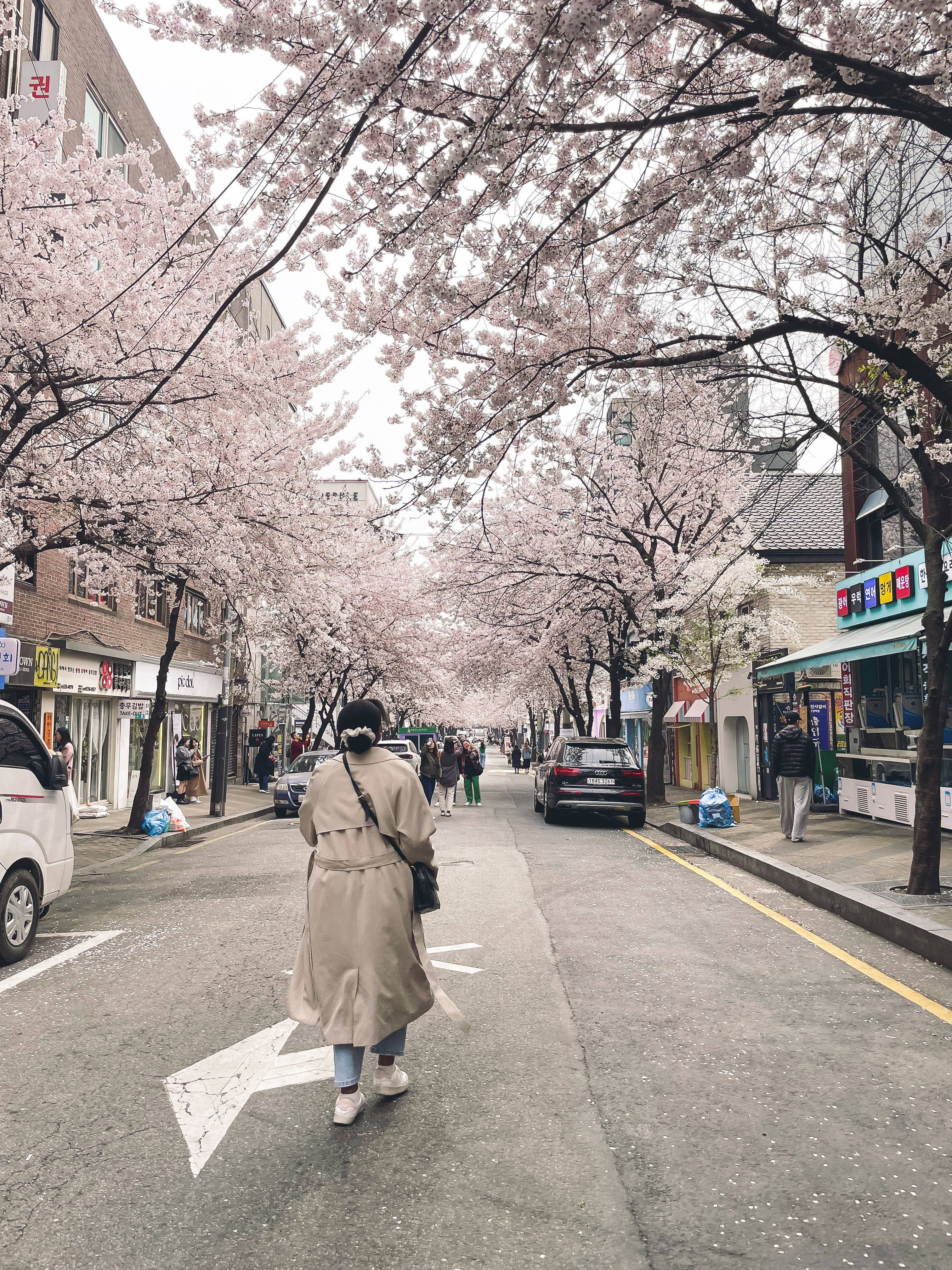
Spring (March - May) is arguably the most beautiful time to visit. Cherry blossoms are blooming, temperatures are getting warmer, and a lot of corners of Seoul look like a film set. Layers are your best friend here since mornings can be genuinely cold while afternoons warm up quickly. A light jacket you can tie around your waist is more useful than a heavy coat.
Summer (June - August) is hot, humid, and intense, and I mean that sincerely. The humidity in particular hits differently if you're coming from a dry climate. This is also monsoon season (장마), usually hitting hardest in July, so a good quality umbrella, clothes that dry quickly, and rain boots or waterproof sandals are non-negotiable. Breathable, lightweight clothing is the move. One caveat though: Korean indoor spaces are aggressively air-conditioned in summer to the point where you'll want a cardigan or light layer for restaurants, cafes, and the subway.
Autumn (September - November) is the other peak season alongside spring, and for good reason. The foliage is stunning, the weather is crisp and comfortable, and it's genuinely one of the best times to be in Korea. Similar packing logic to spring -- layers, with slightly warmer options as you move into November.
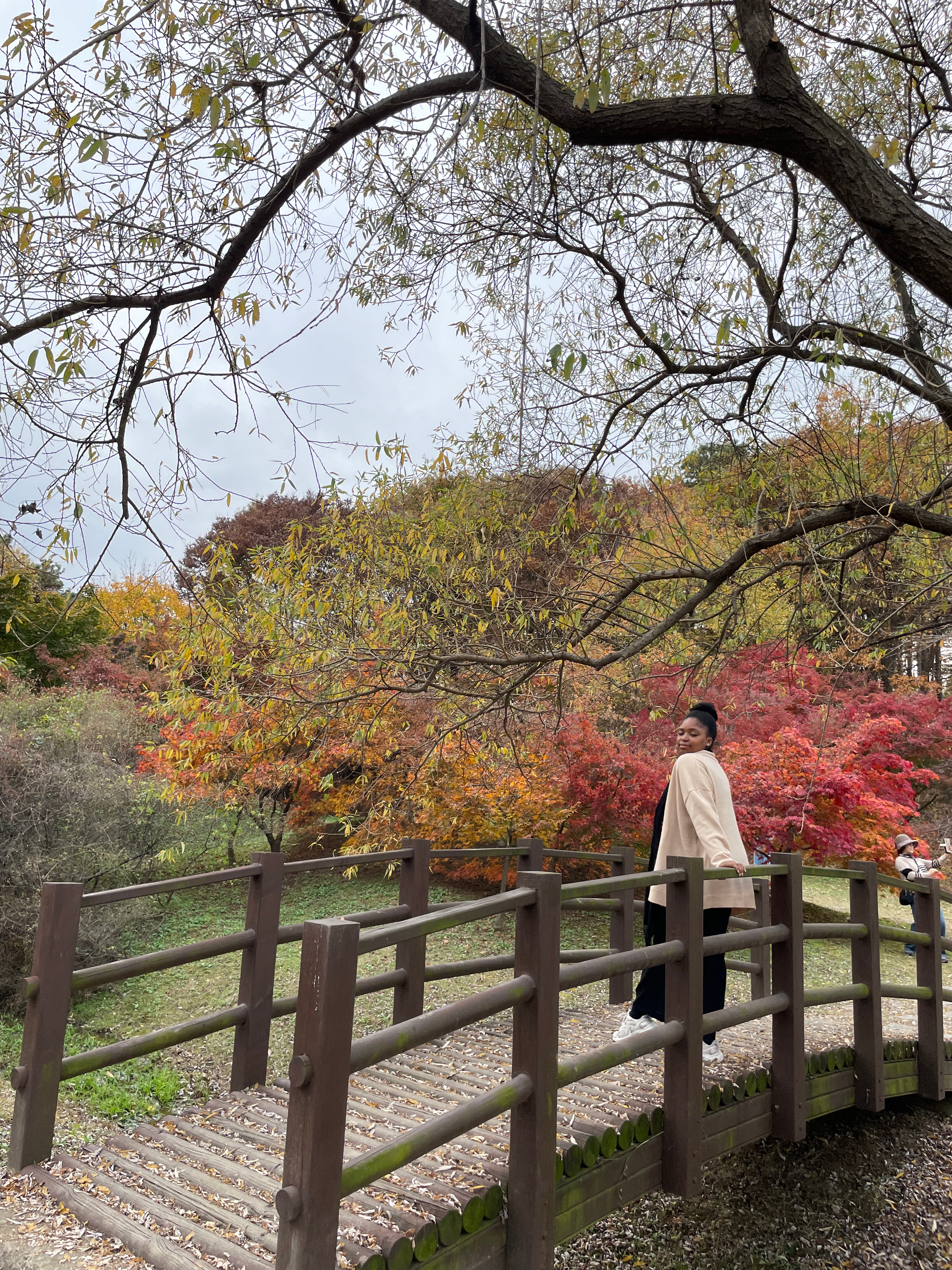
Winter (December - February) is cold. Properly cold, with temperatures regularly dropping below zero and wind chill that makes it feel even colder. A proper winter coat (better yet a long padded jacket), snow-proof shoes, thermal layers, gloves, and a hat or earmuffs aren't optional, they're survival gear. The good news is that Korean indoor heating is as aggressive as the summer air conditioning, so you'll be warm the moment you step inside anywhere. No seriously, you'll feel like you're physically melting.
Anyways, the moral of the story is to definitely consult weather reports before you pack.
Regardless of when you visit, there are a few universal packing truths for Korea:
Comfortable walking shoes are non-negotiable. Seoul in particular is a walking city and you will cover significantly more ground on foot than you might expect, blisters on day two are a rite of passage nobody needs. Leave the brand new sneakers at home and break in whatever you're bringing first.
On the topic of shoes specifically, if you're visiting anyone's home or certain traditional restaurants where you remove your shoes at the entrance, slip-ons or shoes that are easy to take off and put back on without a whole production are a quiet quality of life improvement. High tops and Doc Martins without zips are not your friend.
A small day bag or tote is also worth having for market trips, convenience store hauls, and the inevitable Olive Young purchases that somehow multiply when you're not looking, especially because most places charge 100 Korean won for a plastic or paper bag.
Shopping as a Foreigner in Korea
One of the common mistakes foreigners make is stockpiling certain items or bringing a full heavy suitcase to Korea with the assumption that a lot of their needs and/or preferences won't be catered for. This is half true and half not true.
For example, you can leave the endless deodorant and roll-on at home (unless you're picky about the brand), most Olive Young stores will have various versions of Nivea roll-on and deodorant available. The same goes for feminine products (except tampons - which aren't popular here), but Korean feminine products also have a huge variety and are available easily at convenience stores or Olive Young. Granted, certain things like black hair products (for 4C hair specifically) aren't as easily available but they are available online through Coupang (if you are able to create an account), or through Amazon, and in in-person stores in Itaewon and Pyeongtaek, Gyeonggi-do (heavily foreigner-saturated areas). It's also become significantly easier to get darker-skinned makeup products such as TirTir and Espoir's foundation cushion.
This might be mostly relevant for long-term stayers but if you're a tourist trying to make the 23kg baggage limit on your inbound trip, then rest assured knowing you can leave some toiletries behind and find them in South Korea. The skincare capital is famous for a reason!
Also, if you're a skincare enthusiast, you'll want to have as much empty space leftover in your baggage as possible for the mandatory Olive Young and pharmacy shopping sprees that you go on! This is especially since the evolution of drug-story-style pharmacies has created a brand new type of K-beauty experience that allows you to get a skincare analysis/consultation from actual pharmacists when buying limited availability skincare (often premium products from less mainstream brands and skincare clinics themselves).
Check out this TikTok featuring one popular pharmacy brand called Optima Wellness Museum (OWM) found across Seoul at multiple locations such as Seongsu, Itaewon, Bukchon, and more.
You might also be concerned about clothes shopping in Korea, especially if you don't have a Korean body type, but thankfully there are a number of 'plus size' Korean brands that have emerged over the years such as Richmood, Romistory, JStyle Evellet, and Coolsis in Seoul. Additionally, you can visit franchise stores like Uniqlo, Zara, H&M, Nike, and Adidas for more sizing options, too. If your body type is closer to the Korean body type then you can find clothes at almost any store in the malls, shopping outlets, and even boutiques in subway stations and student areas like Hongdae and Sinchon.
Korean Society: Language, Public Etiquette, and Cultural Taboos
Korean society operates on a set of unspoken social rules that are worth knowing before you arrive, not because Koreans will necessarily call you out for breaking them, but because being aware of them makes your experience smoother.
The one that surprises most overseas visitors is the dress code logic. Korea is not conservative in the way you might assume, short skirts and shorts are completely normal and you'll see them everywhere, especially in summer. What IS considered inappropriate is showing your chest or shoulders. Cleavage and even off-shoulder tops can draw unwanted attention or quiet disapproval, particularly from older Koreans. It's a different modesty framework to what most foreigners are used to, but once you know it, it's easy enough to navigate. There's also a rise in more Korean women revealing their shoulders or wearing tops that break this stigma, but you will likely catch an ahjumma giving them some bombastic side eye as they pass by.
On the subject of public behaviour, Koreans are generally quite reserved in shared public spaces. The subway in particular has an almost library-like quiet to it during off-peak hours. Keep your voice at a conversational level at most, avoid taking phone calls in the carriage (step out at a stop if you need to), and don't eat on the subway. It's not illegal but it's considered rude and you will get looks. Different rules tend to apply during peak commutes time, though.
Escalator etiquette is also worth knowing: stand on the right, walk on the left. This is religiously observed in Seoul especially, and standing on the wrong side during rush hour will earn you some pointed stares or a pointed nudge.
Koreans have a strong culture of hierarchical respect, particularly around age. If someone older pours you a drink, receive it with two hands or your right hand supported by your left. The same goes for receiving business cards, gifts, or really anything handed to you formally. It's a small gesture but it registers.
Don't stick your chopsticks upright in a bowl of rice, it's associated with funeral rites and considered bad luck at best, deeply offensive at worst. Similarly, pouring your own drink before others at the table is a faux pas. Pour for the people around you first.
Shoes off at the entrance is standard in Korean homes and in some traditional restaurants. If you see a step up at the entrance and shoes lined up outside, take yours off.
Money Culture
South Korea is one of the most cashless societies in the world, you can tap your card at convenience stores, restaurants, taxis, and even street stalls in most cases. That said, cash still has its place and you don't want to be caught without it. Traditional markets like Namdaemun Market, some pojangmacha (street food stalls), and smaller 노포 (old-school mom and pop restaurants) are often cash only. You'll also need cash to top up your T-Money card at convenience stores if the machine isn't accepting your foreign card.
On that note, foreign cards (VISA or Mastercard) work fine at most ATMs and larger retailers, but having some Korean Won on you as a backup is just sensible travel practice. You can exchange currency at the airport, at banks, or at the surprisingly good exchange booths in Myeongdong which often offer competitive rates. If you're not from the US, EU, UK, or Japan, I would double check whether you need to convert your country's currency (South African Rand in my case) to dollars first before even taking off from your home country's airport.
About safety (this is another big misconception) Korea is genuinely one of the safest countries in the world to travel in, and this is worth saying explicitly because a lot of first-time visitors arrive with an unnecessary level of anxiety about it. You can walk around late at night as a solo traveler, leave your laptop on a cafe table while you go to the bathroom, and generally move through the city without the hypervigilance that travel in many other countries requires. That's not to say you should be completely careless, petty theft exists everywhere, but Korea is about as low-risk as it gets. If you're a woman, especially, you should still be wary, though.
Don't tip anyone. Ever. There is no tipping culture in Korea and leaving a tip can actually create an awkward moment rather than a grateful one. There might be tip jars on the counters of bars or cafes, but you're not obligated to contribute. The price on the menu is the price you pay, full stop. This applies to restaurants, taxis, hair salons, spas, everywhere. You'll adjust to it faster than you think and your wallet will thank you.
Hygiene: Some Culture Shocks Waiting to Happen
Public bathrooms in Korea are one of those things that genuinely exceed expectations. They're clean, they're everywhere (subway stations, parks, convenience stores, shopping malls), and they're free. Finding a bathroom in Seoul is never really a problem. Of course, results may vary, crowded areas and older establishments might not have the same level of cleanliness as a huge restaurant, cafe chain, or even the subway.
That said, there are two things worth knowing before your first encounter. The first is that some Korean bathrooms, even in relatively modern buildings, require you to put used toilet paper in the bin next to the toilet rather than flushing it. There'll usually be a small bin right there for this purpose. It's a plumbing infrastructure thing rather than a hygiene lapse because Seoul's pipe system can't handle the load (yes, that was as awful for me to write as it was for you to read), but it catches a lot of foreigners off guard the first time.
The second is squat toilets. They still exist, particularly in older buildings, traditional market areas, some stalls of rest stops, and some parks. Most places will have at least one Western-style stall available but it's worth knowing they're out there so you're not surprised.
It also helps to carry around some hand sanitizer as some bathrooms might have communal bar soap instead of hand wash available.
Do Koreans Speak English? Basic Korean Phrases to Memorize
The honest answer is: it depends heavily on where you are and who you're talking to. In tourist-heavy areas like Myeongdong, Itaewon, Gangnam, and Hongdae, you'll find English speakers fairly easily. Outside of those pockets, especially in residential neighbourhoods or smaller cities, English proficiency drops significantly and you'll be relying on gestures, translation apps, and goodwill.
The good news is that Koreans are generally quite patient with foreigners trying to navigate language barriers, and Papago (a translation app by Naver) is your best practical tool, you can point it at a menu, a sign, or a product label and it'll translate in real time. Download it before you land.
That said, knowing even a handful of Korean phrases goes a long way, both practically and in terms of the warmth it generates from locals. The Korean go-to small talk with foreigners is, "오 한국말 되게 잘하시네요 (oh han-guk-mal dwe-ge jal-ha-shi-ne-yo --> oh, you're so good at Korean)."
Koreans genuinely appreciate when foreigners make the effort, even imperfectly.
Here are the ones actually worth memorising:
- 안녕하세요 (an-nyeong-ha-se-yo) - Hello (formal)
- 감사합니다 (gam-sa-ham-ni-da) - Thank you (formal)
- 여기요 (yeo-gi-yo) - Excuse me / Over here (to call a server)
- 이거 주세요 (i-geo ju-se-yo) - This one, please (point at the menu)
- 얼마예요? (eol-ma-ye-yo) - How much is this?
- 화장실 어디예요? (hwa-jang-sil eo-di-ye-yo) - Where is the bathroom?
- 맵지 않게 해주세요 (maep-ji an-ke hae-ju-se-yo) - Please make it not spicy
- 영어 할 줄 아세요? (yeong-eo hal jul a-se-yo) - Do you speak English?
- 괜찮아요 (gwaen-chan-a-yo) - It's okay / I'm fine (incredibly versatile)
A note on pronunciation: Korean is actually one of the more phonetically consistent languages once you learn Hangul (the Korean alphabet), and Hangul itself can be learned to a reading level in a few hours if you're motivated. Even just being able to read menu items phonetically, without understanding what they mean, is surprisingly useful in restaurants that don't have picture menus.
Tourist Attractions to See in Seoul
For a look into South Korea's rich culture and history, I'd recommend visiting history and art museums such as the MMCA Seoul (National Museum of Modern and Contemporary Art Seoul), the National Museum of Korea, or even the Seodaemun Prison History Hall for a look into how Korea gained independence from Japanese colonialism.
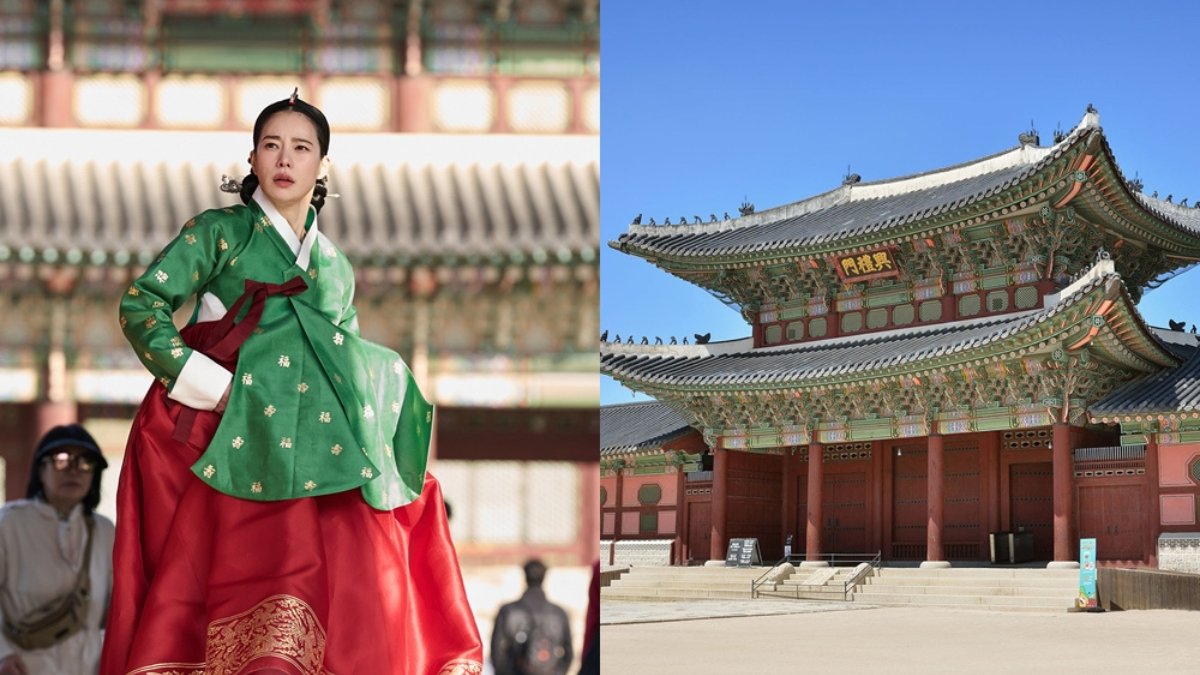
For outdoor experiences, the five royal palaces in the Jongno and Jung districts are worth at least one visit, Gyeongbokgung is the most iconic and has a free changing of the guard ceremony worth timing your visit around. Namsan Seoul Tower (N Seoul Tower) gives you a panoramic view of the whole city and is especially beautiful at night. If you want something a little more off the beaten path, Seoul Forest in Seongsu is a gorgeous green escape in the middle of the city for a picnic, and the Bukchon Hanok Village offers a rare glimpse of traditional Korean architecture that somehow survived the rapid modernisation of the city around it.
For a more curated Seoul experience that blends the city's history with its contemporary culture, check out my guide to Seoul Dal, one of my favourite ways to experience the city like an actual Seoulite rather than a tourist ticking boxes.
Korean Food 101: Food Recommendations and Flavor Profiles
Korean food culture is one of the best things about living here, and I say that as someone who has eaten their way through a significant portion of Seoul over six years. A few things worth knowing before you dive in.
Korea is not the easiest destination for vegetarians, vegans, or those eating halaal, however, it's doable, and it's gotten noticeably better in recent years, but you'll need to be intentional about it. A lot of dishes that appear vegetarian contain anchovy-based broth or small dried fish in the seasoning, so always check. Halaal-certified restaurants are concentrated mostly in Itaewon and around Masjid Seoul in Hannam-dong. That said, temple food (사찰음식) is a beautiful fully plant-based Korean dining tradition if you want the authentic experience without the meat.
One thing that will never be a problem though is finding food at any hour. Korea runs on a 24-hour food culture and eating at 2am is completely normal. Convenience stores, delivery apps, and plenty of restaurants keep hours that make the rest of the world look like it goes to bed too early.
Korean Flavor Profiles, Side Dishes, And Must-Eat Korean Foods
Most Korean cuisine revolves around three foundational pastes and sauces that you'll encounter again and again: gochujang (고추장, a fermented red chili paste that's spicy and slightly sweet), doenjang (된장, a fermented soybean paste similar in concept to miso but with its own distinct depth), and ganjang (간장, soy sauce, which comes in multiple varieties for different uses). Once you understand these three, Korean menus start making a lot more sense.
Korean food is also not monolithic. Alongside the traditional dishes, there's been a genuine embrace of Western comfort food and, particularly exciting right now, authentic Chinese flavors. Malatang (마라탕) specifically has taken Seoul completely by storm.
It's worth knowing that this is different from Korean-Chinese food, which is its own genre based around chunjang (춘장, black bean paste) and dishes like jajangmyeon and jjamppong. Both are delicious but they're distinct experiences.
One of the first things you'll notice at almost any Korean meal is banchan (반찬), a spread of small side dishes that come automatically with your food, at no extra cost. Kimchi is always there, but depending on the restaurant you might also get seasoned spinach, fish cake, pickled radish, steamed egg, and more. You can ask for refills on banchan and you absolutely should.
Must-eats foods worth building your itinerary around
- 삼겹살 (samgyeopsal) - grilled pork belly, cooked at the table, wrapped in lettuce with garlic and ssamjang
- 비빔밥 (bibimbap) - mixed rice bowl with vegetables, egg, and gochujang
- 순두부찌개 (sundubu jjigae) - silken tofu stew, spicy and deeply comforting
- 냉면 (naengmyeon) - cold buckwheat noodles, either in broth or with a spicy sauce, perfect in summer
- 떡볶이 (tteokbokki) - chewy rice cakes in a spicy-sweet gochujang sauce, a street food staple
- 치맥 (chimaek) - fried chicken and beer, an entire cultural right-of-passage
Cheap Eats: Where to Eat On A Budget
Korea is genuinely one of the more affordable places to eat well, especially if you know where to look.
Traditional markets are your best starting point. Gwangjang Market (광장시장) in Jongno is the most famous and worth visiting at least once for the atmosphere and the food, bindaetteok (mung bean pancakes) and mayak gimbap are the classics here. Just be aware that Gwangjang has become extremely touristy in recent years and some vendors have adjusted their pricing and energy accordingly. Koreans try to boycott the market because of pricing scams, but go with low expectations and you'll still have a great time. Some great alternatives include the Tongin Market (통인 시장 - famous for their Korean lunchboxes aka 도시락) and Namdaemun Market (남대문 시장) famous for hotteok (fried honey-filled pancakes - sometimes filled with veggies or other toppings).
Convenience stores, CU, GS25, Emart24, and 7-Eleven, deserve their own paragraph because calling them just convenience stores dramatically undersells what they are. They're a full lifestyle. You can get a genuinely decent meal (kimbap, triangle gimbap, ramyeon cooked on the spot with the hot water machine, steamed buns, corn dogs) for super cheap. Korean convenience store culture is its own thing and embracing it early will serve you well, especially for late nights and early mornings.
Supermarket food counters are also criminally underrated for budget eating, E-Mart and Lotte Mart all have food sections with sushi, pizza, fried chicken, etc. where you can get staple fast food items at a fraction of the price.
And then there are 노포 (nopo), the old-school, often family-run restaurants that have been in the same spot for decades. They usually have a small menu, low prices, and food that a lot of fancy restaurants are quietly trying to replicate. No English menu, often no English at all, but Papago and pointing go a long way. This is the most authentic Korean food you'll find in Seoul.
My Personal Tasty Restaurant Recommendations
For Korean food, I'd recommend 명륜진사갈비 (Myungrun Jinsa Galbi) for a bottomless buffet-style barbecue experience. It's a franchise so you can find one near you. This is the best option if you want to try a lot of types of meat without worrying about the cost adding up. For more serious barbecue, Namu Garden (나무 가든) in Yeouido or Dutum (두툼) in Gangnam are really good options, too. The latter has a long waiting time (be warned).
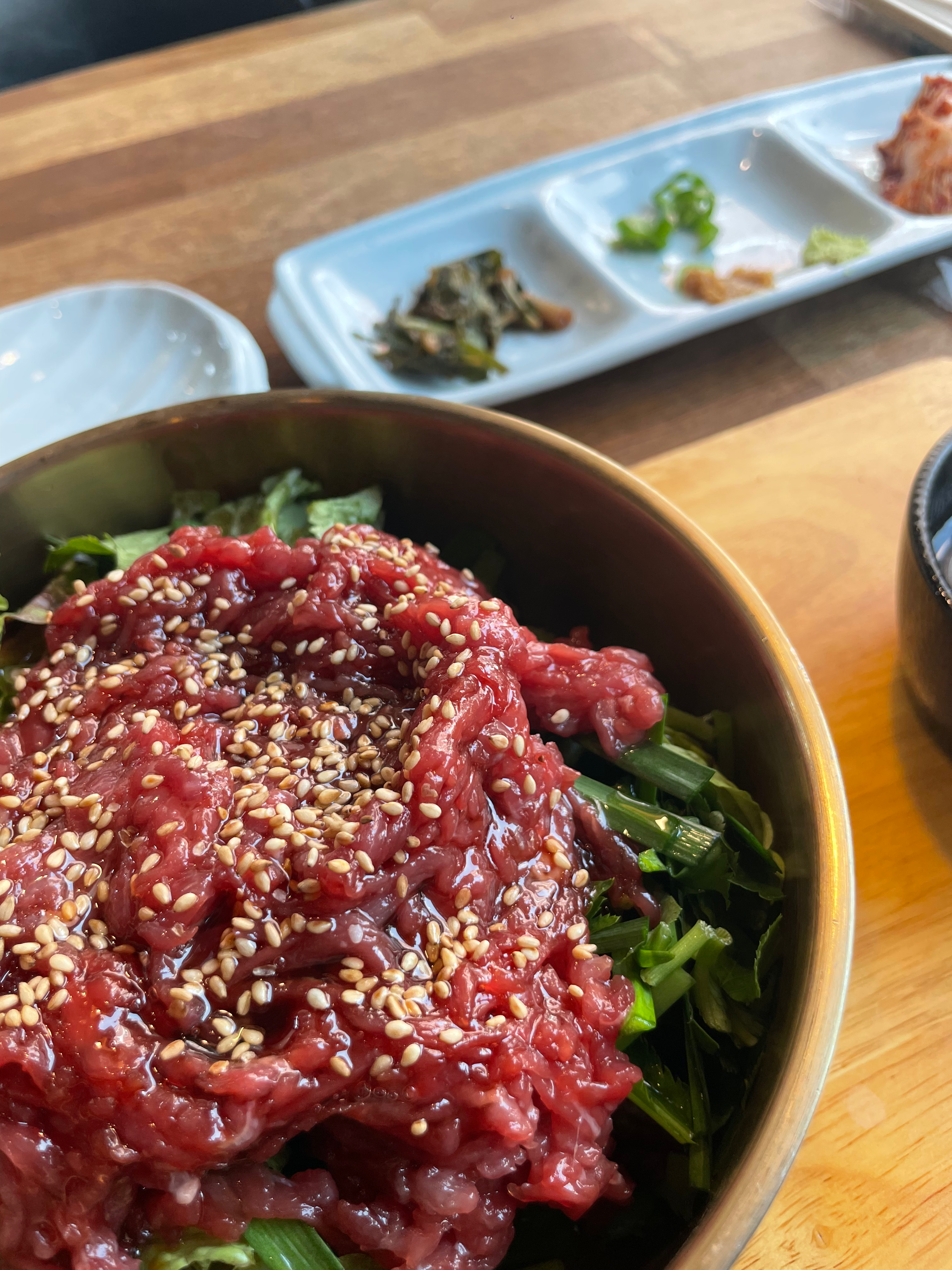
For non-barbecue Korean food, if you don't have something against raw meat then Anguk Koda (안국고다) in Insadong serves a really good yukhoe (raw meat sashimi) bibimbap with super fresh veggies and side dishes.
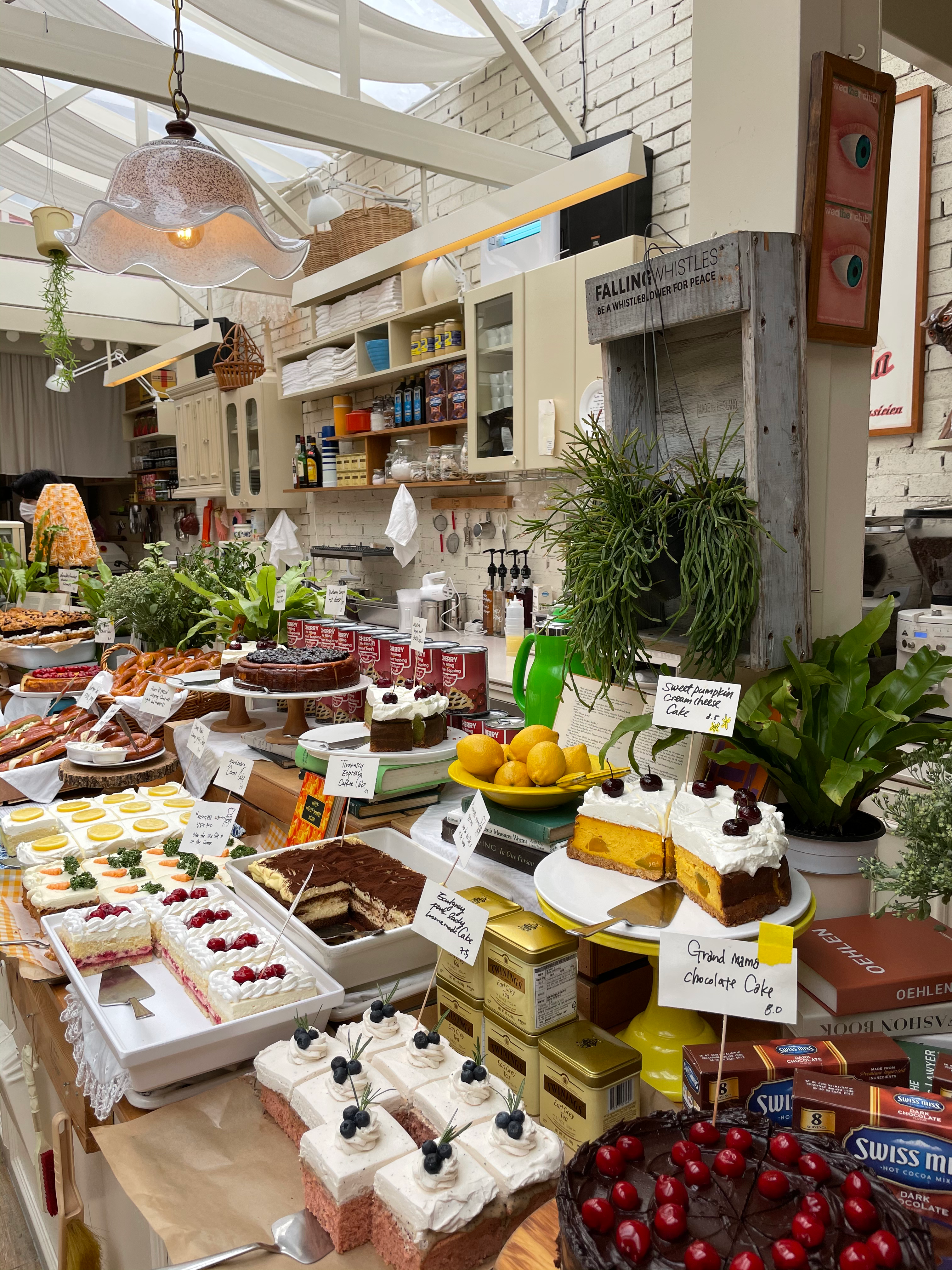
For a cafe, while there are a ton of aesthetic cafes in Seoul, one of my personal favorites is Cafe Layered because I believe they have the best cake I've tasted in the city. This cafe has two stores, one in Anguk and one in Yeonnam.
If you're looking for foreign cuisine, my personal favorite restaurant is Sauce on the border of Itaewon and Haebangchon (the owner is South African and serves the best Western (UK & US) and South African food). If you like American BBQ then I recommend Linus BBQ which is also in Itaewon.
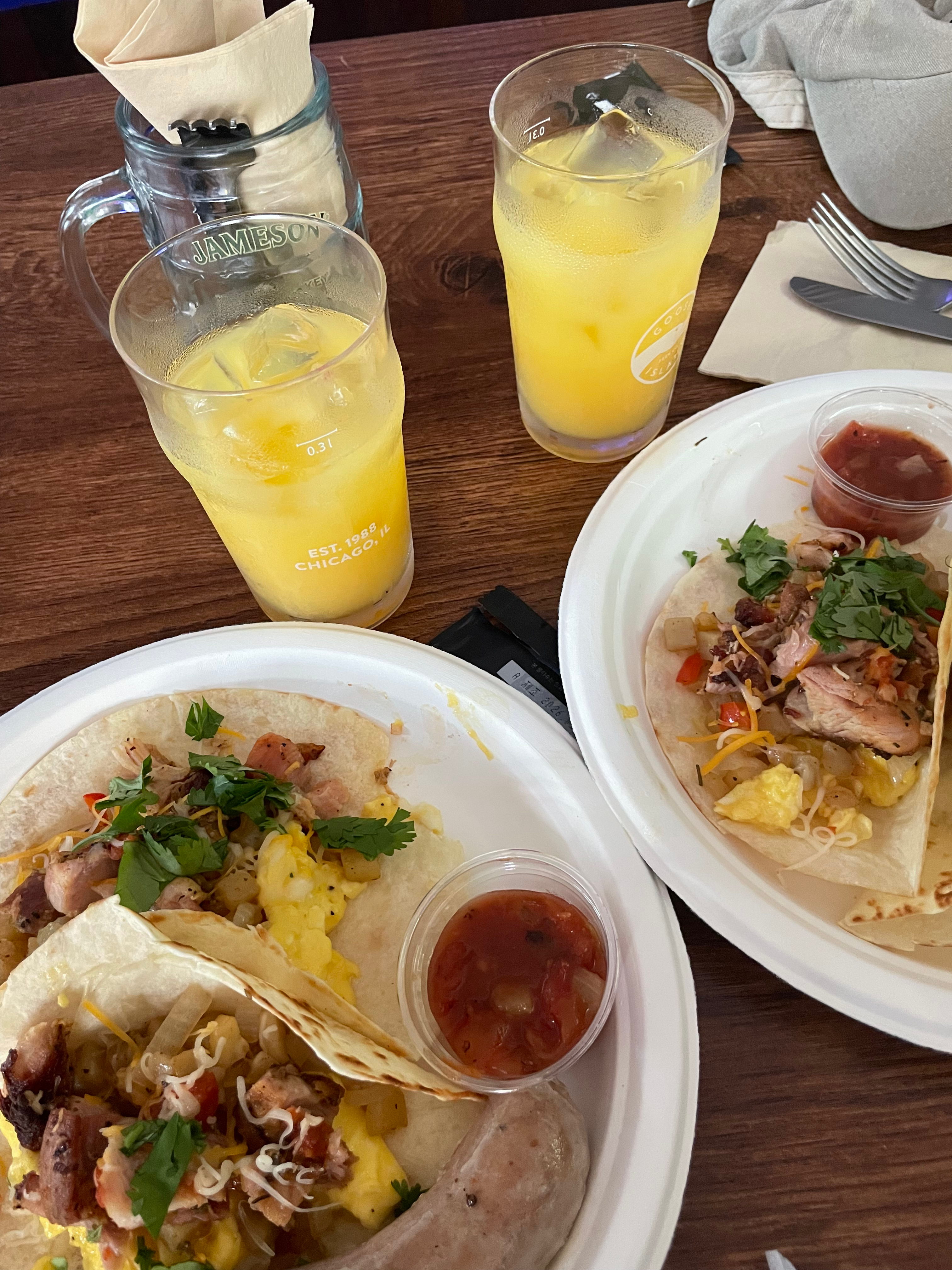
For franchise foods (that don't include McDonalds, KFC, etc.) I'd recommend Cuchara for a Chipotle dupe, Downtowner for a decent almost-gourmet hamburger and super good fries, Shabu All Day for shabu shabu, and Slow Cali for really fresh but filling salad/poke bowls. These have multiple locations, so find one near you.
If you're planning a trip to Korea soon, let me know the spots you're planning to visit and whether this article was helpful or not in the comments!